
Our fantastic partner Wim from the International School of Starvanger gives us an insight into what it takes to form a lasting school partnership with a grassroots NGO.
We have been raising funds for NLA at school, through a range of different activities. We have learned, over time, that three things are really important:
Find a teacher willing to take on or coordinate things at their school,
Give the students ownership, letting them choose and organise activities themselves and
Give quick feedback after the fundraising, in the form of reports or pictures of how the funds have been used, so that students, their parents and also teachers can see that their efforts are leading to something concrete.
This is one of the reasons why we chose to support NLA (initially we supported the Norwegian Refugee Council, a much bigger organisation) - it is a small organisation, and first thanks to Charly and now Alexandra, we have a direct "link", so to speak, as I have been directly communicating with them both over the years. I am sure students, or a school in general, can be motivated for a one-off fundraiser in different ways, but if you want a longer term commitment, you need to establish a connection, and provide them with an overview and pictures after the fundraising. This will help for future initiatives at that school.
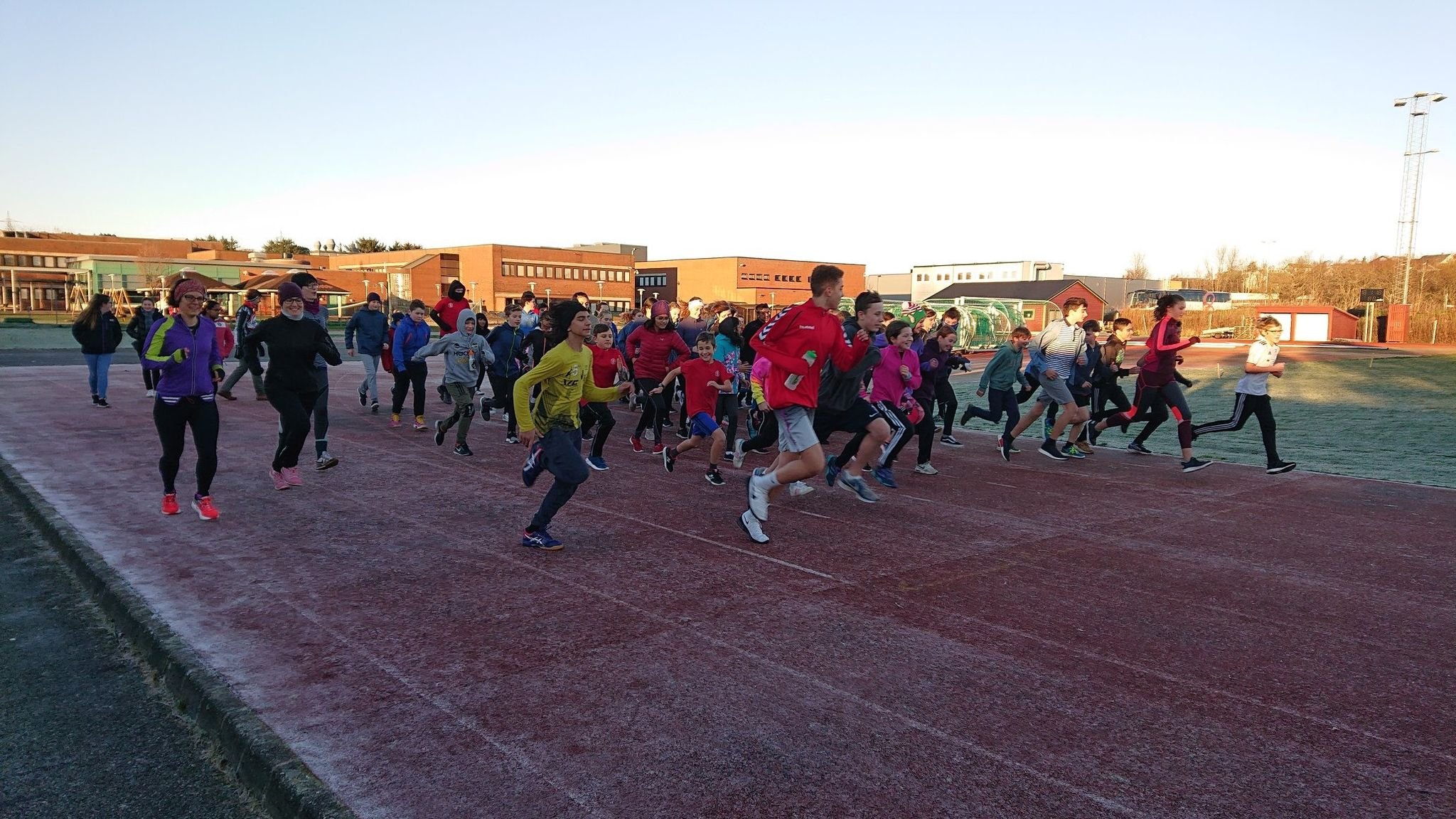
Our biggest event is the annual sponsored run - this is something I suggested as a teacher, so it is not student-driven as such, but I do work with a group of students during the months before the run to let them find and carry out ways to announce and advertise the run, and to motivate their peers. I give them suggestions and examples of what has worked in the past, but they are free to do this whichever way they want. Having a group of 10-12 students lead these "awareness" activities, has worked really well. Every year, the group of students involved this way is different, therefore including more and more young people in these projects. The sponsored run itself requires students to find sponsors willing to support them for each lap they run or walk on our track around the football field at school. We chose this a couple of years ago as a way to get them to do both a physical (the running) and an organisational (finding sponsors) effort, as that is also what refugees have to do when they look for safety, albeit at a totally different level of course.
I am sure students, or a school in general, can be motivated for a one-off fundraiser in different ways, but if you want a longer term commitment, you need to establish a connection, and provide them with an overview and pictures after the fundraising.
We have also collected clothes - sometimes as a result of me finding out from Alexandra that specific items are needed, but often this is initiated by the students themselves. In the past year, the athletics director has gotten involved, donating lots of sports uniforms that I then sent to Kavala, in January and June. The money for the shipment comes from a group of 25-30 colleagues who all chip in with a small contribution every time I ship something, such as 4-5 euros each. They are happy to contribute, and again this creates a larger platform of people involved in supporting NLA. One of the things I have learned about supporting an organisation with a school, for instance, is that everyone wants to help, but not all want to do that the same way. Some like to donate items, chip in financially, or bake something for a bake sale event... The more diversity we can allow for, the more people will get involved (everyone does like to help somehow, at the end of the day), and the more NLA will gain from these efforts.
In December, we usually have 3 music concerts, where our students perform for the parents, one for Primary, Middle and High School each. The same group of students who publicise the sponsored run, also organise bake sales during these concerts. We set up a roster of who will bake and who will sell on which night. This, again, gives people a chance to participate in a different way, be it baking or buying cake and cookies. Many people are uncomfortable at the idea of just making straight out donations, certainly online, but a bake sale, a clothes donation etc, gives them the option to still help, without making an actual financial donation on an account somewhere.
As we are a school, raising awareness about the world, and in this case about the plight of the refugees, is crucial too. So publicising the sponsored run by making information boards, or having students speak at assemblies to their peers, or showing pictures or a video that we get from Alex, all of that is really important. At the concerts in December, for instance, some students, at some point during the concert, give a little explanation of the work NLA does, and how we can contribute as a school, for instance by buying something at the bake sale after the concert.
For the past 3 years, I have also had groups of students making display boards, a video or organising a clothes donation of their own, through the Service Learning unit in their Social Studies classes, which I teach. Some of these students have, for instance, contacted Alex and asked her directly what items were needed for the shop, and then they set out to find them and they organised some fundraising of their own to be able to ship the clothes to Kavala.
As we are a school, raising awareness about the world, and in this case about the plight of the refugees, is crucial too.
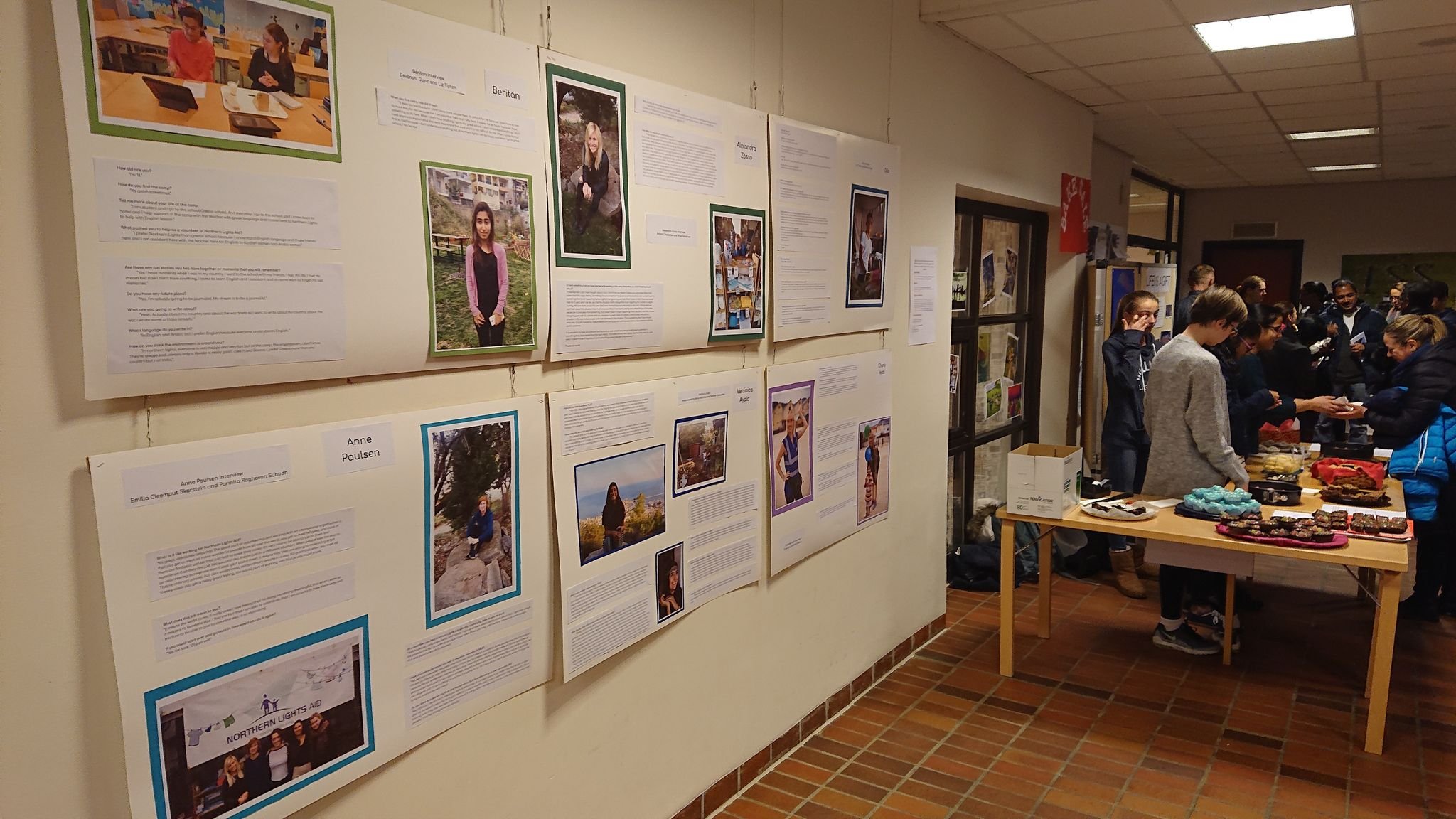
Two years ago, students interviewed a handful of international volunteers and members of the camp who spoke English, via Skype, and they wrote down their stories, illustrating them with big pictures. They then organised a month-long exhibition of these stories in the school foyer, where it was seen by hundreds of people. The exhibition also served as a backdrop for the concert bake sale events that year. When we took the exhibition down, we moved the interview displays to my classroom, where they still are now.
